 By
By
Blocked IPs. Incomplete product data. Missed pricing updates. See how businesses scrape e-commerce website data safely and keep their pipelines fresh with RapidSeedbox.
Table of Contents
- Why Ecommerce Web Scraping Is a Competitive Edge
- Why Ecommerce Websites Block Scrapers
- How to Scrape Ecommerce Websites Safely and Efficiently
- From Reliable Scraping to Real Business Impact
- Why Businesses Prefer RapidSeedbox
- FAQs
Why Ecommerce Web Scraping Is a Competitive Edge
Web scraping is the foundation of your data strategy if you manage product analytics or pricing intelligence.
Tracking competitors, monitoring stock, benchmarking delivery times, and adjusting prices dynamically are all possible with this tool.
But as ecommerce platforms evolve, scraping them reliably has become increasingly difficult.
You’re likely facing:
- IP bans after scaling crawlers
- Data gaps from dynamic content or region locks
- Hours lost maintaining fragile pipelines
- Vendors that promise scale but can’t deliver uptime
In short, the data your business depends on often arrives incomplete, late, or not at all.
Why Ecommerce Websites Block Scrapers
To prevent automated crawling that could overload their systems or scrape sensitive pricing, ecommerce sites rely on advanced bot protection.
They analyze every request by:
- IP reputation – shared or datacenter IPs get flagged quickly
- Header fingerprinting – identical headers signal automation
- Session tracking – repeat cookies and user agents mark bots
- Velocity control – rapid, repeated product queries trigger blocks
- Geo-restrictions – data access is limited by region or currency
When these systems detect your scraper, you’ll see CAPTCHAs, 403s, or incomplete pages, corrupting your dataset.
Bottom line: scalable ecommerce data collection requires infrastructure that looks and behaves like real user traffic.
How to Scrape Ecommerce Websites Safely and Efficiently
To be successful at e-commerce scraping, you must combine technical precision with smart proxy management.
Here’s how other businesses do it without downtime.
1. Use Residential Rotating Proxies
Static IPs are too easy to detect.
Residential proxies route your scraper through real devices worldwide, making requests appear organic.
With RapidSeedbox, you can:
- Rotate IPs automatically per request or session
- Target specific countries or cities
- Access clean, verified IP pools for higher success rates
This provides consistent access to global e-commerce sites, including those with dynamic pricing or localized listings.
2. Randomize Headers and User Agents
Sites track identical browser patterns.
Rotate User-Agent, Referer, and Accept-Language headers, and store session cookies to mimic real browsing.
Tip: Save sessions for a few requests before rotating. It improves authenticity and avoids triggering new-user checks every time.
|
1 2 3 4 5 6 7 |
import requests, random, time headers = {"User-Agent": random_user_agent()} proxies = {"http": "http://proxy.rapidseedbox.com:8000"} url = "https://example-ecommerce.com/product/123" response = requests.get(url, headers=headers, proxies=proxies) time.sleep(random.uniform(1.2, 3.5)) |
3. Control Request Speed and Timing
No matter how good your proxies are, sending hundreds of requests too quickly will get you banned.
Add random delays and adaptive throttling to mimic human browsing.
Example pacing:
- 1–3 seconds between requests
- Batch pauses every 100–200 products
- Jitter variation for realism
Result: fewer blocks, fewer retries, and cleaner data.
4. Handle CAPTCHAs Intelligently
CAPTCHAs are the last defense layer.
Instead of using a brute-force approach, integrate a CAPTCHA solver or use RapidSeedbox’s rerouting system, which automatically switches IP pools to reduce challenges.
Log every CAPTCHA event. If you see a spike, it means that your crawler’s pattern has become too predictable. This is a signal to slow down or adjust the rotation frequency.
5. Monitor Data Freshness and Quality
Reliable data equals business confidence.
Set up automatic freshness checks that validate:
- Product counts and categories
- Missing or empty fields
- Price variance across sessions
- Response codes per domain
The earlier you catch inconsistencies, the less time your analysts spend cleaning data.
From Reliable Scraping to Real Business Impact
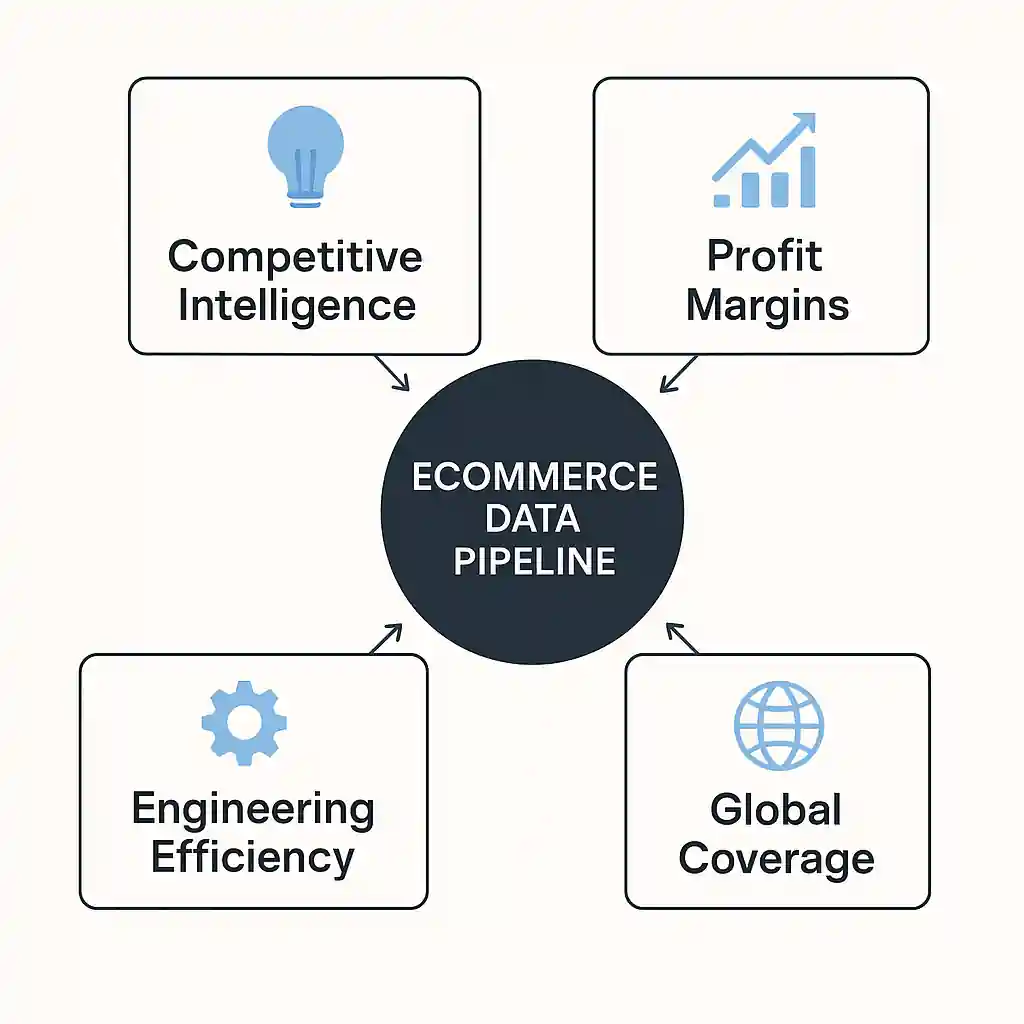
When your ecommerce data pipeline works, every decision improves. When it doesn’t, you lose time, insights, and revenue.
Smarter Competitive Intelligence
Accurate product and price data can reveal market shifts early. Teams can respond faster, adjusting campaigns or inventory before competitors react.
Stronger Profit Margins
Dynamic pricing only works with reliable data. Fresh inputs mean fewer pricing errors and better ROI on automation.
Less Engineering Waste
Stable infrastructure frees your developers from debugging proxy failures, so they can focus on analytics and optimization.
Global Market Coverage
Rotating proxies unlock localized data, which is essential for understanding regional differences in stocks, currencies, and markets.
Predictable Scaling
A stable scraping framework turns your operation from reactive to proactive. You can scale confidently knowing your data will hold.
Why Businesses Prefer RapidSeedbox
Most proxy providers sell IP addresses. RapidSeedbox offers a partnership that includes infrastructure and real technical support.
Benefits for Ecommerce Data Teams
- Fewer blocks with rotating residential pools
- Real engineers offering direct support
- Transparent dashboards for full control
- Test-before-commit onboarding
- Proven reliability for enterprise volume
Ready to Scrape Ecommerce Websites Reliably?
Every blocked request is lost insight. RapidSeedbox gives your team the scale, speed, and support needed to scrape ecommerce websites safely and turn that data into action.
Need help choosing the right proxy?
Our support team can help you find the ideal setup for your e-commerce scraping needs – residential, data center, or mobile.
FAQs
Yes, for public data used in research or analytics. Always respect site Terms of Service and local data laws.
Residential rotating proxies are most effective. They simulate real users and reduce block rates.
Absolutely. Use geo-targeted proxies to access localized listings and currency variations.
Depends on market volatility, but most teams refresh data hourly or daily for pricing and stock accuracy.
Monitor HTTP codes and data completeness. Sudden drops in field count or identical payloads often signal blocking.
Final Tip
Ecommerce data is your competitive advantage, but only if it’s accurate and fresh. Start small, test rotation stability, then scale with confidence.
Most teams who test RapidSeedbox stay.
Disclaimer: This content is for educational purposes only. RapidSeedbox does not encourage violating any website’s Terms of Service. Users are responsible for ensuring their scraping practices comply with applicable laws and policies.
0Comments