 By
By
Incomplete reviews. Sudden drops in feedback. Inconsistent sentiment signals. Glassdoor reviews are crucial to understanding how employees feel, but reliably collecting them is difficult. Here’s how HR analytics teams can scrape public Glassdoor reviews without encountering blocks, gaps, or distorted perceptions.
Glassdoor Reviews Aren’t Just Opinions
If you work in employer branding, HR analytics, recruiting strategy, or workforce intelligence, Glassdoor reviews are more than just “nice insights.”
They’re early warning systems.
Glassdoor review scraping provides reliable insights:
- Employee morale shifts before resignations spike
- Culture risks across different locations
- Compensation discrepancies and fairness signals
- Management quality perception trends
- Department-level sentiment patterns
- Competitor employer brand positioning
- Hiring difficulty indicators
- Post-layoff sentiment shifts
However, consistently scraping Glassdoor review data is challenging.
Teams often experience:
- Endless CAPTCHAs
- Missing review text
- Disappearing historical reviews
- Page freezes
- Pagination that stops early
- Wrong reviews for wrong regions
- Fluctuating sentiment between runs
When review scraping breaks down, executives make strategic decisions based on incomplete information.
Why Glassdoor Makes Scraping Difficult
Glassdoor reviews are not static content. They contain personal and sensitive information that can impact a person’s reputation, so platforms protect them aggressively.
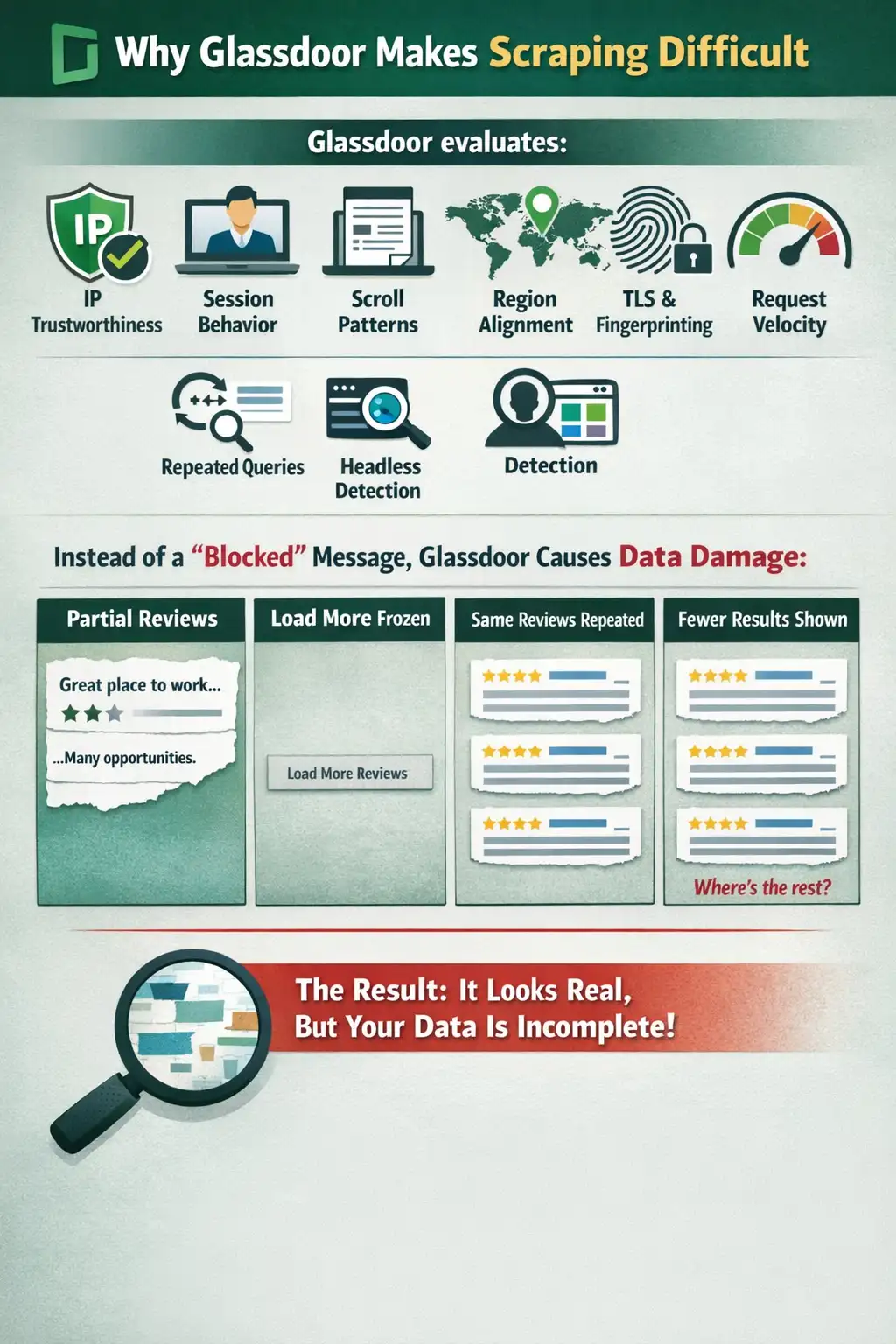
Glassdoor evaluates:
- IP trustworthiness
- Session behavior
- Scroll patterns
- Region alignment
- TLS and browser fingerprinting
- Request velocity
- Repeated query patterns
- Headless browser detection
Rather than displaying a clear “blocked” message, Glassdoor typically indicates data damage.
- Showing partial review bodies
- Freezing “load more reviews”
- Repeating the same review set
- Returning fewer reviews than displayed
- Delaying page loading intentionally
This creates the worst problem of all. Your data appears legitimate, but it’s not really complete.
How to Scrape Glassdoor Reviews Safely and Reliably
To consistently scrape Glassdoor reviews, use residential proxies with stable sessions, real-browser automation, and human-paced scrolling. Only extract publicly visible review content, avoid aggressive query patterns, and monitor for missing reviews to maintain clean sentiment datasets.
1. Use Residential Proxies with Region Accuracy
Glassdoor personalizes review visibility based on region.
Your IP influences:
- Which reviews appear first
- How far back historical reviews load
- Language visibility
- Filtering behavior
- Review ordering logic
Residential proxies help by providing:
- Real-user browsing identity
- Reduced CAPTCHA frequency
- Region-accurate review feeds
- Session stability for long extraction runs
When your HR team is comparing data from multiple countries, geo precision isn’t an option – it’s essential for accuracy.
2. Render Reviews Using Real Browser Automation
Glassdoor review pages load dynamically, so static scrapers often miss:
- Full review bodies
- Pros/Cons sections
- “Advice to Management” fields
- Date stamps
- Ratings breakdown (Work-life balance, Culture, Salary)
- CEO approval sentiment
- Pagination scrolling content
Use Playwright or Puppeteer to load review panels fully:
|
1 2 3 4 5 6 7 8 9 10 |
from playwright.sync_api import sync_playwright with sync_playwright() as p: browser = p.chromium.launch(headless=False) page = browser.new_page() page.goto("https://www.glassdoor.com/Reviews/company-reviews.htm") page.wait_for_timeout(3000) html = page.content() browser.close() |
This ensures that you analyze the same experience that a real user sees.
3. Scroll and Interact Like a Real Employee Reading Reviews
Glassdoor measures behavior patterns.
Here’s an example of a safe behavior:
- Uneven scroll timing
- Pauses between loaded reviews (2-6s)
- Occasional scroll-back activity
- Delays after opening filters
- Session “reading time” every few pages
Avoid:
- Smooth auto-scroll loops
- Rapid “load more” clicks
- Parallel scraping from one IP
- Identical browsing patterns
Dramatically reducing silent blocking requires human-like interaction.
4. Only Collect Publicly Accessible Glassdoor Review Fields
To stay sustainable and compliant, simply collect only what a normal user can see publicly.
Public fields typically include:
- Review text
- Star rating
- Review title
- Job role
- Location (if shown publicly)
- Employment status (former/current)
- Review date
- Pros/Cons section
- Advice to Management (visible reviews)
- CEO approval & recommendation metrics (public summary)
Avoid:
- Reviewer identity
- Backend analytics
- Paid-tier data
- Profile-locked content
The ethical and durable approach is to stick to public reviews.
5. Watch for Silent Review Loss and Sentiment Drift
Glassdoor rarely “fails loudly.”
Monitor:
- Number of reviews returned vs displayed
- Missing Pros/Cons fields
- Repeated review batches
- Sudden reduction in historical reviews
- Layout changes inside the review container
- Unexpected “login required” jumps
- Latency spikes before blocks
- Sorting behavior inconsistencies
If your average rating changes dramatically overnight without business cause, assume it is due to scrape corruption rather than reality.
What Clean Glassdoor Review Data Unlocks for the Business
Once Glassdoor scraping is stable, HR teams will have more precise information and more time.
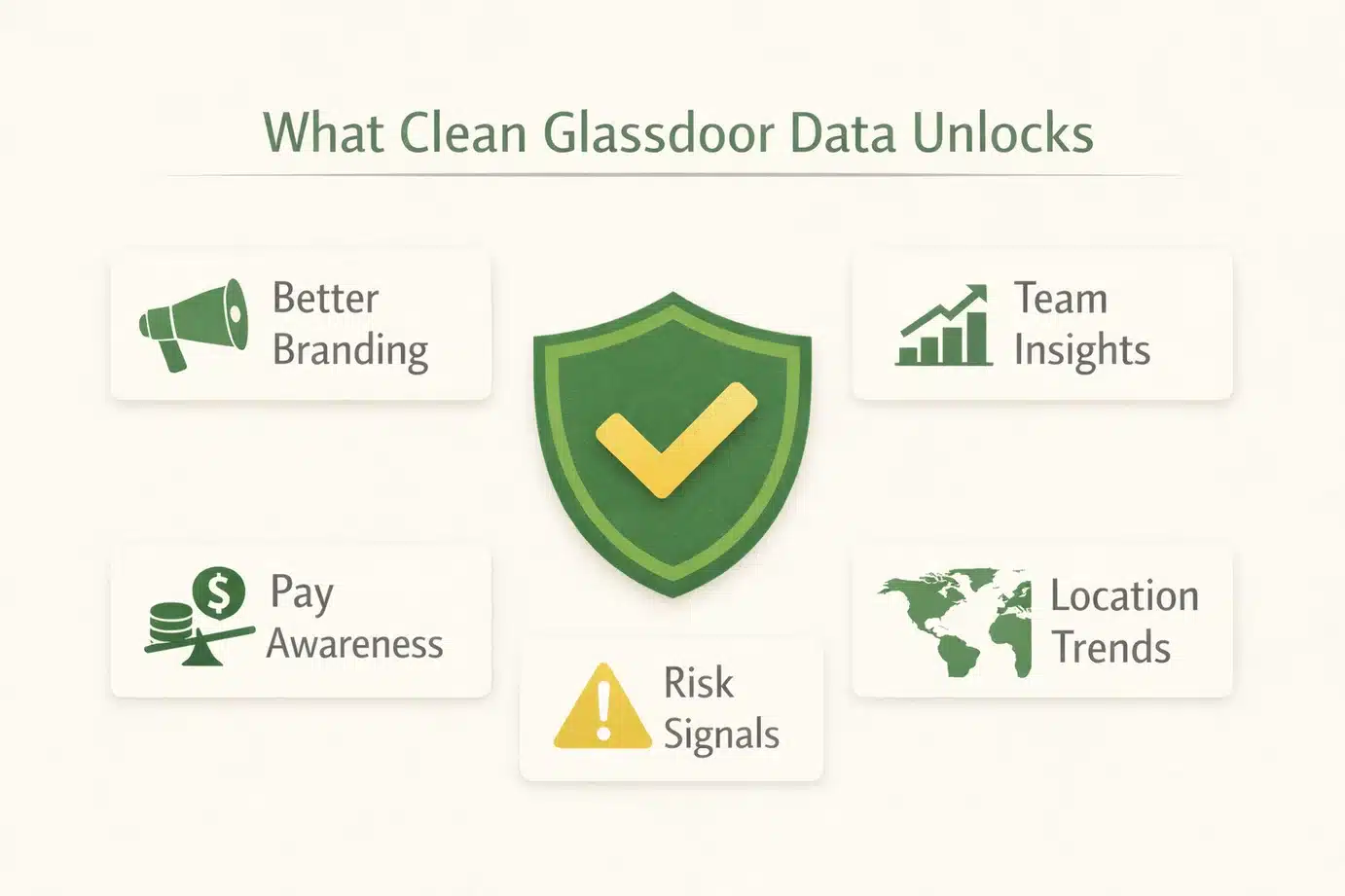
Stronger Employer Brand Decisions
You react to real feedback, not some noisy fragments.
Early Risk Detection
Spot morale drops early enough to intervene.
Leadership and Culture Insight
Look for recurring themes of praise or pain across teams.
Compensation and Fairness Signals
The disparities highlighted in reviews are crucial information for HR to be aware of.
Location-by-Location Awareness
Compare sentiment across offices and countries.
Less Manual Review Checking
Automation removes the endless screenshot spreadsheets.
Reliable review data builds better people strategies.
Why Companies Choose RapidSeedbox for Glassdoor Scraping
The practice of gathering information from Glassdoor does not entail aggressive tactics. The focus is on precision, empathy, and stability.
RapidSeedbox provides:
- Clean residential proxy pools
- Region-accurate IP distribution
- Exceptionally low Captcha rates
- Sticky session options
- Transparent dashboards
- Real human engineering support
- Safe, test-first onboarding
Ready to Scrape Glassdoor Reviews Without Losing Trust in the Data?
If your workforce analytics, employer branding strategy, or leadership decisions rely on Glassdoor, it is imperative to ensure the integrity of your data.
RapidSeedbox provides the necessary infrastructure, geospatial accuracy, and support to ensure the successful execution of your project.
FAQs
You may collect publicly visible reviews, but must comply with Glassdoor’s Terms and applicable laws.
Soft throttling, personalization, and session behavior influence what appears.
Residential proxies with accurate geo targeting and stable sessions.
Weekly for insight tracking, more often during crisis monitoring.
Missing reviews, shorter review lists, repeating content, and increased Captchas.
Disclaimer: This content is for educational purposes only. RapidSeedbox does not encourage violating any website’s Terms of Service. Users are responsible for ensuring compliance with all applicable laws and policies.
0Comments