 By
By
IPv6 is not inherently bad for security and introduces new features like built-in support for IPsec. However, the adoption process for IPv6 brings unique challenges like dual-stack environments. These can result in potential weaknesses, such as new attack vectors.
As organizations transition to IPv6, understanding its unique security landscape is critical to ensuring a safe and seamless integration. This article explores whether IPv6 poses security risks and discusses who should implement it.

Table of Contents
- Security Features of IPv6
- Security Challenges Introduced by IPv6
- Is IPv6 safer than IPv4?
- Should I Have IPv6 On or Off?
- Final Thoughts
1. Security Features of IPv6

During the design process for IPv6, security was a critical architectural component. This resulted in several features. However, the effectiveness of these features depends on proper implementation and adherence to best practices.
a. Built-in Support for IPsec
One of the most prominent security advancements in IPv6 is the mandatory support for IPsec. Unlike IPv4, where IPsec is optional, IPv6 was designed to enable encryption and authentication at the network layer.
Key benefits:
- End-to-End Encryption: IPsec secures data as it moves between devices.
- Authentication: Ensures data packets come from a verified source.
- Integration with IPv6: Native support for IPsec streamlines deployment.
However, IPsec in IPv6 is not automatically enabled, and its effectiveness relies on active implementation and management by network administrators.
b. Elimination of NAT and Enhanced Transparency

In IPv4, Network Address Translation (NAT) was widely used to conserve IP addresses and add a layer of security by hiding internal network structures. IPv6 eliminates the need for NAT, enabling devices to have unique, globally routable IP addresses.
Security Advantages:
- Simplified Network Architecture: With no NAT, the network is less complex, reducing misconfigurations that attackers can exploit.
- Direct Device-to-Device Communication: Enables end-to-end security measures, such as encrypted tunnels or secure sessions, without interference from NAT.
However, the loss of NAT as an implicit security barrier means administrators must adopt other strategies. New measures like robust firewall configurations are necessary to protect internal networks.
c. Improved Packet Handling and Fragmentation
IPv6 simplifies packet handling by using a fixed header size and reducing the need for intermediary devices to fragment packets. IPv6 also removes the ambiguity of fragmentation by requiring the sending device to handle packet fragmentation.
Security benefits:
- Reduced Attack Surface: Minimizes vulnerabilities exploited by fragmentation-based attacks, such as overlapping fragments.
- Consistency in Packet Delivery: Reduces opportunities for attackers to exploit ambiguities in network traffic.
d. Extension Headers: Flexibility with Risks
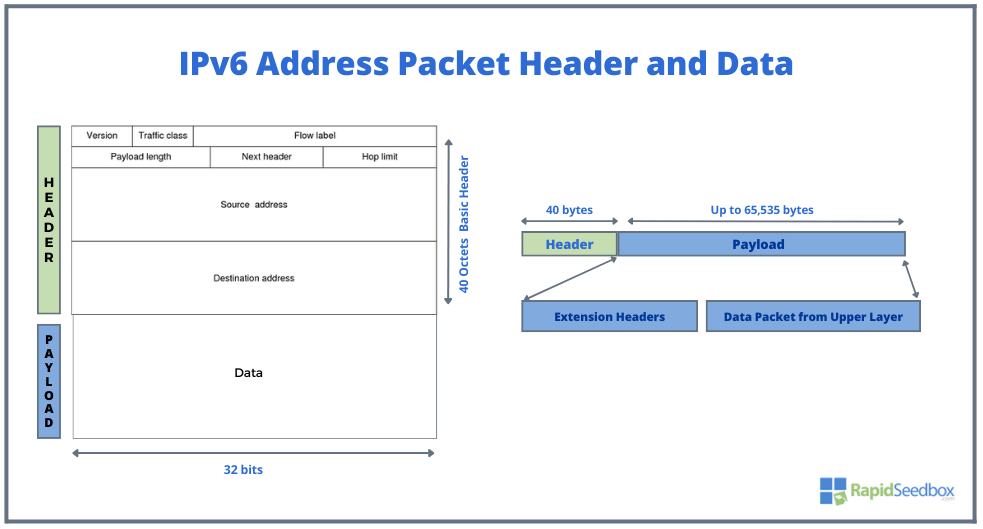
IPv6 introduces extension headers, which allow for the inclusion of optional information in a packet. While these headers offer flexibility and scalability, they can also pose security challenges.
Advantages:
- Customizability: Extension headers support advanced features, like mobility and routing, that can enhance network operations.
- Improved Efficiency: By moving optional information to extension headers, the IPv6 header remains streamlined.
The problem with these headers is that there exists a potential for abuse. Attackers can exploit extension headers to bypass firewalls, evade intrusion detection systems, or launch Denial-of-Service (DoS) attacks.
e. Link-Local Addressing and Limited Scope
IPv6 introduces link-local addresses. These are automatically assigned to all devices on a local network segment. The addresses are only reachable within their local link, providing an additional segmentation layer.
Security benefits:
- Reduced Exposure: Devices with only link-local addresses are inaccessible from the broader internet, minimizing their exposure to external attacks.
- Segmentation: Network administrators can use link-local addressing to isolate sensitive devices within a network.
Ready to future-proof your network?
IPv6 adoption is growing fast—don’t get left behind! RapidSeedbox offers secure and scalable IPv6 IP leasing to help your business transition seamlessly. With reliable performance and world-class support, you can take full advantage of IPv6’s capabilities.
2. Security Challenges Introduced by IPv6
The transition to IPv6 has created a complex landscape. Much of this is caused by the mixed environment, where new and old technologies coexist. Because of this, any mismanagement of the protocol can significantly raise security threat profiles.
a. Complexity and Misconfiguration Risks
IPv6’s design, while more advanced, is also more complex than IPv4. This complexity introduces several challenges that can lead to security vulnerabilities:
- Larger Address Space: Complicates efforts to detect unauthorized devices or malicious activity.
- Configuration Errors: Can expose systems to attacks. These errors are more likely due to many IT professionals’ unfamiliarity with IPv6.
- Default Configurations: Many systems enable IPv6 by default, even if not explicitly used. This can result in “shadow” IPv6 traffic that bypasses IPv4 security measures.
For example, a misconfigured IPv6 firewall could leave ports open, exposing internal systems to external threats that would have been blocked under IPv4.
b. Dual-Stack Networks
During the transition to IPv6, many networks operate in a dual-stack environment, running both IPv4 and IPv6 simultaneously. While this ensures compatibility, it also doubles the attack surface:
- Increased Complexity: Two concurrent sets of security policies, firewalls, and monitoring tools increase the likelihood of mismanagement.
- Cross-Protocol Attacks: Attackers can exploit weaknesses in either protocol.
- Unmonitored Traffic: Dual-stack environments can inadvertently prioritize IPv6 traffic, which may bypass IPv4 security measures.
c. New Attack Vectors
IPv6 introduces new features that attackers can exploit if not properly secured:
- Extension Headers: Attackers may chain extension headers to evade security measures like firewalls or intrusion detection systems.
- Neighbor Discovery Protocol Attacks: NDP is vulnerable to spoofing and Denial-of-Service (DoS) attacks, similar to ARP spoofing in IPv4.
d. Device and Network Readiness
IPv6 adoption varies widely across devices, networks, and regions, and this inconsistency creates security gaps:
- Outdated Devices: Many older devices still in use may lack proper IPv6 support or updates, making them vulnerable to exploitation.
- Inconsistent Implementation: Not all vendors consistently implement IPv6 security features, such as IPsec, across their products.
- Monitoring and Forensics Tools: Mixed support may reduce the ability to monitor traffic, analyze logs, or conduct incident investigations effectively.
e. Transition and Legacy Systems
The gradual transition to IPv6 means that legacy systems running IPv4 will coexist with newer IPv6 implementations for years. This coexistence creates challenges for securing both protocols:
- Interoperability Issues: Compatibility layers like NAT64 or tunneling mechanisms (e.g., 6to4, Teredo) can introduce vulnerabilities.
- Tunneling Exploits: Attackers can abuse IPv6 tunneling mechanisms to bypass security controls or deliver malicious payloads.
3. Is IPv6 Safer Than IPv4?
| Feature | IPv4 | IPv6 |
| Encryption | Optional; not widely implemented. | Mandatory support, but not enabled by default. |
| NAT | Adds a layer of obfuscation. | Not necessary |
| Fragmentation Handling | Vulnerable to overlapping fragment attacks. | Improved; reduces vulnerabilities. |
| Complexity | Simpler protocol that is widely understood. | More complex. Misconfigurations can lead to vulnerabilities. |
| Dual-Stack | Not applicable. | Requires coexistence with IPv4 during the transition. |
| Attack Vectors | Well-known vulnerabilities. | Susceptible to new risks. |
IPv6 offers features that, when correctly leveraged, make it safer than IPv4. However, its complexity and the transitional period with dual-stack environments can expose networks to additional risks.
4. Should I Have IPv6 On or Off?
Whether to enable or disable IPv6 depends on your specific network environment, level of technical expertise, and security needs.
a. For Everyday Home Users
If you are a typical home user with an internet connection provided by an ISP, your decision to keep IPv6 on or off depends on how your ISP and devices handle it.
When to Keep IPv6 On:
- Your ISP Supports IPv6.
- You Use IoT Devices.
When to Turn IPv6 Off:
- If you’re using older devices or software that doesn’t support IPv6 well.
- If you don’t need IPv6 and are worried about potential risks.
Recommendation: Keep IPv6 enabled if your devices and ISP support it securely. Ensure your router has updated firmware to address known IPv6 vulnerabilities.
b. For Small to Medium Businesses
Small and medium businesses often have mixed IT setups, including older devices and limited IT resources.
When to Keep IPv6 On:
- If you’re transitioning to IPv6-capable infrastructure, keeping IPv6 enabled will future-proof your network.
- If you use IoT and Cloud services, they may benefit from IPv6’s scalability and direct communication capabilities.
- If your business has robust firewall policies and monitoring tools that support IPv6.
When to Turn IPv6 Off:
- If your business relies heavily on older systems that lack IPv6 support.
- If your team lacks knowledge of IPv6 and its security implications.
Recommendation: Keep IPv6 on if your network infrastructure supports it securely. Train your team on IPv6 best practices and ensure monitoring tools are in place.
c. For IT Professionals and Enterprises
Larger organizations with complex networks must approach IPv6 with more detailed planning.
When to Keep IPv6 On:
- Future-Proofing the Network: Enterprises should prepare for the inevitable transition to IPv6, especially for cloud-based services, remote work, and IoT deployments.
- Compliance Requirements: Some industries, such as government or defense, mandate IPv6 support for compliance with regulations.
- Global Scalability: If your organization operates in regions where IPv6 adoption is widespread, enabling it can improve connectivity and performance.
When to Turn IPv6 Off:
- During migration, you may selectively disable IPv6 in certain parts of your network to ensure compatibility and mitigate risks.
- If your current monitoring and intrusion detection systems don’t support IPv6, disabling it temporarily may help you maintain a consistent security posture.
Recommendation: IPv6 should remain enabled but must be accompanied by robust security configurations, dual-stack management, and updated monitoring tools.
5. Final Thoughts
IPv6 represents the future of Internet communication. A global migration isn’t a question of “if,” but “when.” Most current vulnerabilities seen with IPv6 are attributable to management and transition rather than the protocol itself.
Because of this, it’s best to start considering an early migration process rather than adopting a “wait and see” posture – especially due to fears of security issues with IPv6.
Worried about IPv6 security?
IPv6 doesn’t have to be complicated! RapidSeedbox offers expertly managed IPv6 IP leasing to simplify your network setup while keeping your traffic secure. Access limitless address space with seamless integration and dedicated customer support.
0Comments